
Borneo: A Journey of Wildlife, History and Discovery
Borneo is a destination that captures your heart, and every visit reveals something new. This incredible island offers extraordinary wildlife, fascinating cultures, beautiful landscapes, and poignant reminders of history. Having visited Borneo for the fourth time, I can honestly say my love for it grows stronger with every trip.
This time, our group of 14 began our adventure in Sandakan, on Sabah’s northeastern coast. From the moment we arrived, we knew we were in for another memorable experience. Our journey would take us from wildlife sanctuaries and historic landmarks to jungle-lined rivers and the magnificent surroundings of Mount Kinabalu.
Sandakan: Wildlife and History
We settled into the comfortable Sabah Hotel, which provided an excellent base for exploring the area. Sandakan has a fascinating character, combining natural beauty with a rich and sometimes heartbreaking history.
Our first wildlife encounters were particularly exciting. At the reserve, we were fortunate to see proboscis monkeys, with their distinctive noses and wonderfully expressive faces. These unusual primates are native to Borneo and remain one of the island’s most recognisable animals.
Watching them in their natural surroundings was a real treat. Their movements and interactions provided plenty of entertainment for our group. Furthermore, seeing these remarkable creatures reminded us how important conservation efforts are throughout Borneo.
Next, we visited the Sepilok Orangutan Rehabilitation Centre, another unforgettable experience. Seeing orangutans at close quarters was both fascinating and moving. These intelligent animals share many characteristics with humans, making them particularly captivating to observe. The centre plays an important role in rehabilitating orphaned and rescued orangutans. Its work also highlights the challenges facing Borneo’s wildlife.
We also visited the Bornean Sun Bear Conservation Centre, where we learned more about these elusive animals. Sun bears are the world’s smallest bear species, yet they have enormous personalities. Their conservation remains vital, particularly as habitat loss continues to threaten their survival.
A Taste of England in Borneo
One of our Sandakan highlights was wandering around Agnes Keith House. This historic wooden home belonged to American author Agnes Newton Keith, who wrote about life in North Borneo. The house provides an intriguing glimpse into the region’s colonial past.
Afterwards lunch was enjoyed at the English Tea House. Perched above the town, this charming establishment offers lovely views and a wonderfully relaxed atmosphere. Together, these visits offered a delightful change of pace from our wildlife adventures. They also helped us appreciate Sandakan’s cultural heritage and its connections with earlier generations.
Remembering the Fallen
However, our time in Sandakan also included a deeply poignant experience. We visited the Sandakan War Memorial to honour the Australian and British soldiers who died during the Second World War.
The memorial commemorates those who suffered during the Sandakan prisoner-of-war tragedy and the infamous Death Marches. Thousands of Allied prisoners endured terrible conditions, with very few surviving the ordeal. It was the first time I had visited the memorial, and it was a sobering reminder of the human cost of war. Standing there quietly, we reflected on the courage, suffering, and sacrifice of those involved.
Although our trip was filled with beautiful scenery and exciting wildlife, this visit remained one of its most meaningful moments. History has a powerful way of putting our own travels into perspective.
The Kinabatangan River: Into the Jungle
From Sandakan, we continued our adventure towards the magnificent Kinabatangan River. This region is famous for its extraordinary biodiversity and opportunities to observe wildlife along the water.
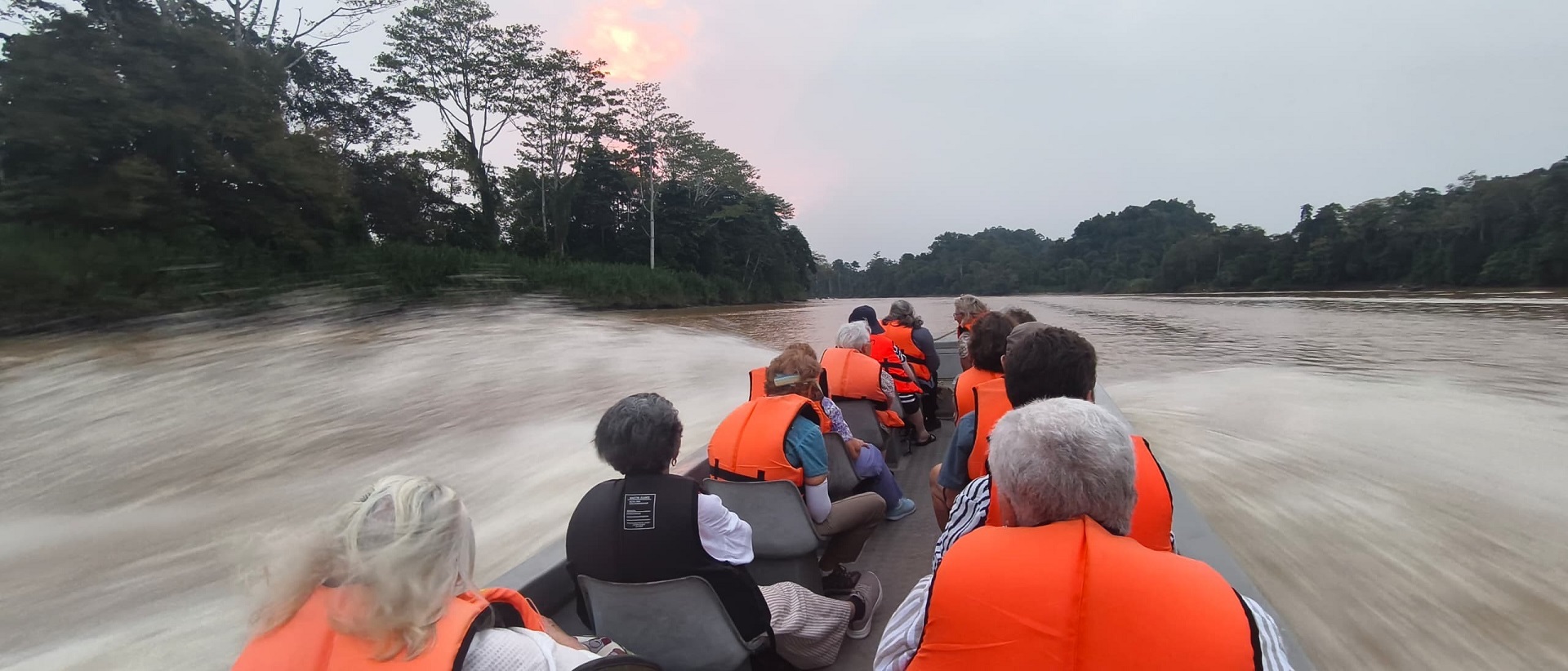
For me, this became one of the absolute highlights of our Borneo journey. The river winds through lush jungle, creating a spectacular setting for wildlife watching. Our speedboat rides were tremendous fun, with the riverbanks rushing past on either side. As we travelled deeper into this green wilderness, it was easy to imagine ourselves as Victorian explorers discovering unfamiliar territory.
The scenery was mesmerising, but the wildlife made the experience truly special. Hornbills appeared overhead, their distinctive silhouettes crossing the sky. We also spotted proboscis monkeys resting among the trees and moving through the riverside vegetation.
At other moments, we were delighted to see otters enjoying their watery surroundings. Each bend in the river seemed to offer another opportunity for discovery.
Then came an especially exciting sighting: a couple of orangutans in the distance. Unfortunately, they were rather far away, so we could not appreciate every detail. Nevertheless, spotting these magnificent animals in the wild was thrilling.
The Kinabatangan reminded us that wildlife watching requires patience, luck, and a little perseverance. Animals rarely appear exactly when or where you expect them. Nevertheless, every sighting felt rewarding, and the river journey itself was unforgettable. The combination of rushing water, towering trees, and incredible wildlife made this experience truly magical.
Kota Kinabalu: Mountains, Gardens and Culture
Eventually, we moved on to Kota Kinabalu, Sabah’s bustling capital city. After spending time surrounded by jungle, arriving in the city offered an interesting contrast.
One particularly memorable excursion took us towards Mount Kinabalu and its wonderful botanical garden. The gardens offered a fascinating introduction to the region’s remarkable plant life. Mount Kinabalu is renowned for its extraordinary biodiversity, including many species found nowhere else.
Walking among the vegetation was a refreshing experience after our busy travel schedule. It also demonstrated that Borneo’s natural treasures extend far beyond its famous orangutans and monkeys.
We also visited a museum-style cultural attraction featuring traditional tribal houses. This provided valuable insight into Sabah’s diverse indigenous communities and their longstanding traditions. The displays helped me understand more about the different tribes, their customs, and their ways of life. They also explored the region’s head-hunting past, an aspect of history that can seem startling today.
Why Borneo Keeps Calling Me Back
Looking back, our journey offered an extraordinary mixture of experiences. We encountered fascinating animals, explored historic homes, honoured wartime sacrifices, and travelled through some spectacular scenery.
Our group shared plenty of memorable moments along the way. From delicious lunches to thrilling boat rides, there was always something to enjoy.
Yet what makes Borneo so special is the way its different experiences complement one another. One moment, you can be watching orangutans in a rainforest sanctuary. The next, you can be reflecting quietly at a war memorial or learning about indigenous traditions.
Borneo is beautiful, but it is also complex, resilient, and deeply moving. Its wildlife inspires wonder, while its history encourages reflection and respect.
This was my fourth visit, and I left feeling even more attached to this remarkable destination. Each journey reveals something different, giving me fresh reasons to return.
For anyone considering a visit, I would wholeheartedly recommend exploring beyond the usual tourist highlights. Take time to learn about the local culture, appreciate the natural environment, and understand the island’s history.
Most importantly, travel with curiosity and an open mind. Borneo has a wonderful ability to surprise you, whatever your expectations.
As for me, I suspect this will not be my last visit. Borneo has captured my heart, and somehow, I love it more every time I return.
See our new Wild Heart of Borneo tour for 2027 that delves deep into the rainforest and stays at the magnificently remote Borneo Rainforest Lodge in Danum Valley.